
“Green” steel in 2026: hydrogen ore reduction and electric furnaces on renewable electricity
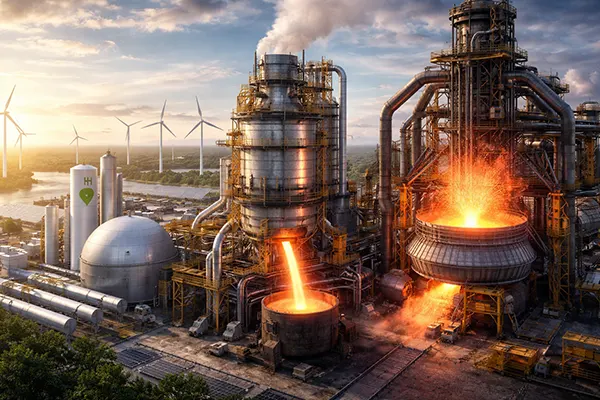
“Green steel” refers to production routes that replace coal-based ironmaking with low-carbon hydrogen and renewable electricity. In 2026, the main focus is on hydrogen direct reduction of iron ore combined with electric arc furnaces, offering a realistic pathway to significantly lower emissions if clean energy inputs are genuinely available at industrial scale.
Hydrogen direct reduction: what changes inside the ironmaking step
In classic blast furnace ironmaking, coke provides both heat and carbon monoxide to remove oxygen from iron ore. Hydrogen DRI separates those roles. Iron ore pellets pass through a shaft furnace where hydrogen reacts with iron oxides to form metallic iron and water vapour.
The chemistry is well understood, but the industrial challenge is delivering large hydrogen flows at consistent purity and temperature while maintaining stable reduction conditions and avoiding clustering or uneven metallisation.
Ore quality becomes more critical than many expect. Pellet strength, impurity levels, and physical behaviour directly affect process efficiency, which is why hydrogen DRI routes often require high-grade DR pellets and tighter upstream control.
Hydrogen supply, storage, and why timing matters
Hydrogen is easy to describe and difficult to deliver at industrial scale. DRI plants require continuous fuel supply, while renewable electricity is variable and electrolysers have operational limits, making storage a core system requirement.
In 2026, large projects increasingly depend on staged ramp-up strategies, starting with partial hydrogen blends before moving toward higher shares as supply expands.
For buyers, the key question is whether hydrogen procurement is contractually firm: long-term renewable power agreements, grid access, and buffering capacity that keeps furnaces running without interruption.
Electric arc furnaces on renewable power: melting, refining, and product quality
An electric arc furnace melts metallic feedstock using electricity. Traditionally, this feedstock is scrap, but in hydrogen routes it is often a blend of scrap and DRI to reduce residual impurities and improve quality control.
Running an EAF on renewable electricity is not simply a matter of certificates. It requires stable grid connections, long-term power contracting, and often additional infrastructure to manage peak demand.
In 2026, the most credible projects treat electricity as an engineered industrial input, not an afterthought, because power price volatility and grid constraints directly affect competitiveness.
What “renewable-powered” actually means in practice
Claims of renewable EAF steel depend on how electricity is sourced hour by hour. Physical matching, long-term PPAs, and transparent emissions accounting matter more than generic renewable labels.
European policy frameworks also increase pressure for verifiable product footprints, meaning mills must document boundaries, allocation rules, and third-party certification for low-carbon grades.
Even with renewable power, residual emissions remain from electrodes, alloys, lime, logistics, and upstream pellet production, so full transparency is essential for credible reporting.
Industrial reality in 2026: where projects stand and what limits scale-up
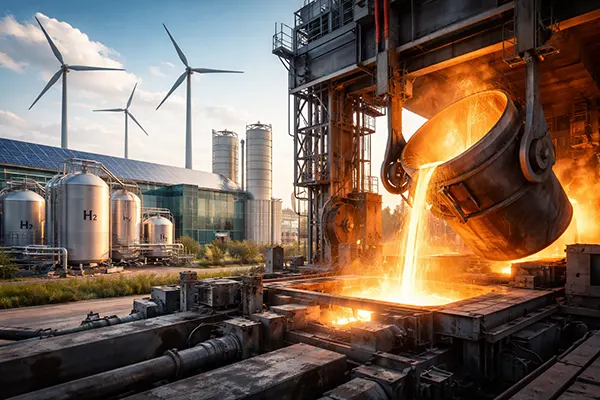
Europe’s flagship hydrogen steel projects show clear progress, but also highlight remaining constraints. Several large plants target commissioning around 2026, combining electrolysis, DRI production, and EAF-based steelmaking.
These timelines reflect real industrial planning: permitting, grid upgrades, hydrogen infrastructure, and equipment procurement all shape how quickly low-carbon steel can scale beyond pilot volumes.
The main limiting factor remains clean energy availability at the required price and volume. Hydrogen DRI plus EAF is fundamentally an electrification pathway, and its climate value depends on truly low-carbon power.
How to evaluate green steel claims responsibly
Start with process clarity: hydrogen DRI plus EAF is not equivalent to partial fuel switching in blast furnaces. The actual reduction route and fuel mix determine emissions outcomes.
Next, look for numbers with context. Percentage reductions are usually relative to conventional blast furnace steel and assume renewable electricity and low-carbon hydrogen, so methodology matters.
Finally, check commercial reality: early production often involves limited volumes, transitional fuel blends, and evolving certification, so serious suppliers should describe ramp-up phases transparently.