
Solid-State Batteries: What Is Slowing Their Mass Adoption in Consumer Electronics
Solid-state batteries are often described as the next major step in energy storage, promising higher energy density, improved safety, and longer lifespans compared to conventional lithium-ion solutions. Despite years of research and substantial investment from major manufacturers, these batteries are still absent from mainstream consumer electronics in 2026. The reasons are not limited to a single technical bottleneck but rather a combination of engineering challenges, production constraints, and economic realities that continue to delay large-scale adoption.
Material and Engineering Barriers in Solid-State Design
At the core of solid-state battery technology lies the replacement of liquid electrolytes with solid materials, such as ceramics, sulfides, or polymers. While this change improves safety by reducing flammability, it introduces significant challenges in ion conductivity. Many solid electrolytes struggle to match the ionic mobility of liquid counterparts, especially at room temperature, which directly affects charging speed and efficiency.
Another critical issue is the interface between the solid electrolyte and electrodes. In lithium-ion batteries, liquid electrolytes naturally conform to electrode surfaces, ensuring stable contact. In solid-state systems, maintaining consistent contact is far more difficult. Even microscopic gaps can increase resistance, reduce performance, and accelerate degradation over time.
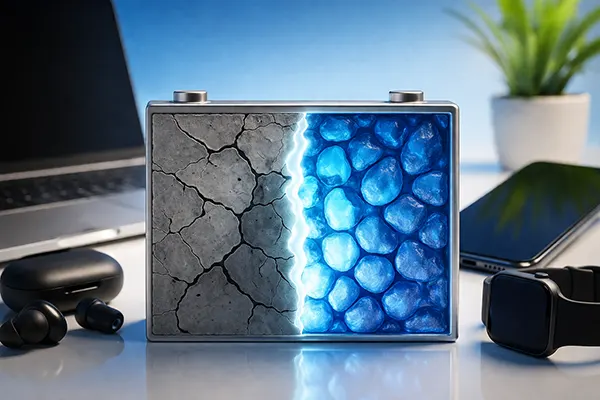
Mechanical stability also remains a concern. During repeated charge and discharge cycles, electrodes expand and contract. In rigid solid-state designs, this can lead to cracking or delamination within the battery structure. These structural weaknesses not only reduce lifespan but also complicate efforts to produce reliable devices for everyday consumer use.
Limitations of Current Electrolyte Materials
Ceramic electrolytes, such as garnet-based compounds, offer high ionic conductivity but are brittle and difficult to process at scale. Their rigidity increases the risk of fractures during manufacturing and operation, especially in compact devices like smartphones or wearables.
Sulfide-based electrolytes provide better flexibility and conductivity, but they are highly sensitive to moisture and can degrade when exposed to air. This creates additional challenges in production environments, where strict atmospheric controls are required to maintain material stability.
Polymer electrolytes, while easier to manufacture, typically suffer from lower conductivity at room temperature. To function effectively, they often require elevated temperatures, which is impractical for most consumer electronics. As a result, no single material currently offers the optimal balance of performance, durability, and manufacturability.
Manufacturing Complexity and Cost Constraints
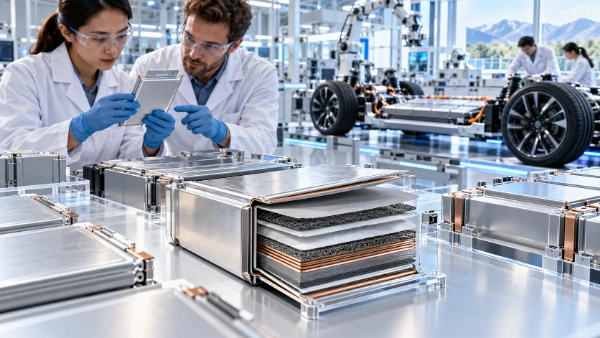
Even if technical challenges are addressed, scaling solid-state battery production remains a major hurdle. Unlike lithium-ion batteries, which benefit from decades of optimisation and global supply chains, solid-state manufacturing processes are still evolving and lack standardisation.
Production requires highly controlled environments, particularly for sensitive materials like sulfides. This increases capital expenditure for factories and slows down throughput. Additionally, many fabrication techniques involve precise layering and pressing of materials, which are difficult to automate at the same level as current battery production lines.
Cost is another limiting factor. As of 2026, solid-state batteries are significantly more expensive per kilowatt-hour than lithium-ion alternatives. This price gap makes them unsuitable for mass-market devices, where cost efficiency is a key driver in product design and pricing strategies.
Challenges in Scaling Industrial Production
One of the main obstacles is yield consistency. Early production lines often experience high defect rates due to the sensitivity of materials and the complexity of assembly. Even minor imperfections can render a battery unusable, increasing waste and reducing overall efficiency.
Equipment limitations also play a role. Many existing lithium-ion production tools cannot be easily adapted for solid-state processes, requiring entirely new manufacturing infrastructure. This transition demands significant investment and time, slowing industry-wide adoption.
Supply chain readiness is another factor. The materials required for solid-state batteries are not yet produced at the scale needed for global electronics markets. Until suppliers can reliably deliver high-quality materials in large volumes, manufacturers will remain cautious about committing to full-scale production.
Performance Trade-offs and Real-World Expectations
While solid-state batteries promise higher energy density, real-world performance often falls short of laboratory results. Many prototypes demonstrate impressive metrics under controlled conditions, but these results are difficult to replicate in commercial products that must operate across a wide range of temperatures and usage scenarios.
Charging speed is another area where expectations do not always align with reality. Although solid electrolytes can theoretically support faster charging, practical implementations often face limitations due to interface resistance and thermal management concerns.
Longevity, often cited as a key advantage, also depends heavily on material stability and manufacturing quality. Inconsistent interfaces or minor defects can lead to rapid capacity loss, undermining the long-term benefits that solid-state technology aims to deliver.
Gap Between Laboratory Success and Consumer Use
Laboratory prototypes are typically small and produced under tightly controlled conditions. Scaling these designs to larger battery formats introduces new variables, such as heat distribution and mechanical stress, which can negatively affect performance.
Consumer electronics require reliability over thousands of charge cycles, often under varying environmental conditions. Achieving this level of durability with solid-state designs remains a work in progress, with many prototypes still undergoing long-term testing.
Finally, integration into existing device architectures presents additional challenges. Designers must adapt to different form factors, thermal behaviours, and safety considerations, which can complicate the transition from lithium-ion to solid-state solutions in commercial products.