
Sodium-Ion Batteries: Are They Ready for Mass Adoption?
The search for alternative battery technologies has intensified as electric mobility, renewable energy storage, and portable electronics continue to expand. Lithium-ion batteries have dominated the market for more than three decades, yet the growing demand for lithium, cobalt, and nickel has raised questions about supply security and long-term sustainability. Against this background, sodium-ion batteries have re-emerged as a serious technological candidate. By 2026, several manufacturers in China, Europe, and North America have already moved from laboratory prototypes to pilot production, raising a practical question: are sodium-ion batteries truly ready for large-scale use?
What Sodium-Ion Batteries Are and How They Work
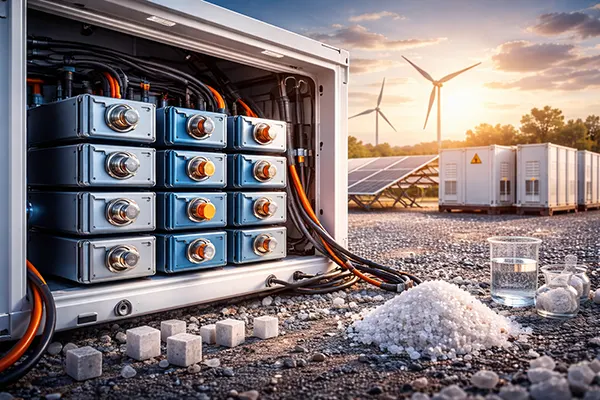
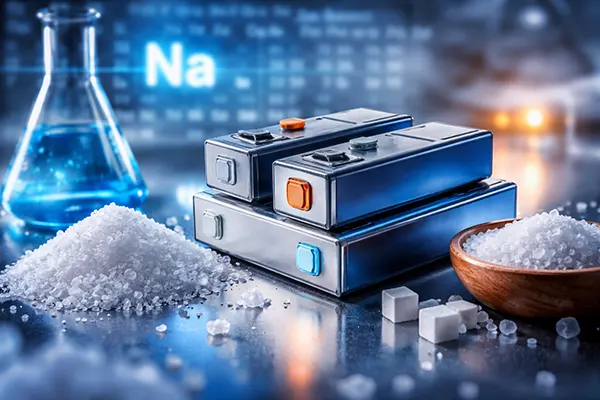
Sodium-ion batteries operate on the same basic electrochemical principle as lithium-ion batteries. Energy is stored and released through the movement of ions between the cathode and anode via an electrolyte. The key difference lies in the charge carrier: sodium ions replace lithium ions. Sodium is far more abundant in the Earth’s crust and can be sourced from common materials such as sodium carbonate or even seawater derivatives, which significantly changes the supply chain dynamics of battery manufacturing.
In most modern sodium-ion designs, the cathode uses layered metal oxides or Prussian blue analogues, while the anode typically consists of hard carbon. When the battery charges, sodium ions move from the cathode and are stored within the carbon structure of the anode. During discharge, the ions return to the cathode, generating electrical energy. Although this process resembles lithium-ion chemistry, the larger size of sodium ions influences electrode design and affects performance characteristics such as energy density.
One of the major engineering advantages of sodium-ion systems is their tolerance to lower temperatures and reduced risk of thermal runaway. Because sodium does not form the same dendrite structures as lithium under many operating conditions, the batteries can demonstrate improved safety profiles. For grid storage and certain vehicle segments, this stability becomes a major factor when considering long-term reliability and operational safety.
Key Materials and Manufacturing Considerations
The material supply chain for sodium-ion batteries differs significantly from that of lithium-ion systems. Sodium itself is inexpensive and widely available, eliminating many of the geopolitical supply concerns associated with lithium or cobalt mining. In addition, cathode materials such as iron, manganese, and sodium compounds are relatively abundant and less environmentally intensive to extract.
Manufacturing processes for sodium-ion cells can also reuse much of the existing lithium-ion battery production infrastructure. Companies developing these batteries have confirmed that many electrode coating, assembly, and formation processes require only modest adjustments. This compatibility means factories built for lithium-ion cells can potentially switch or diversify production without major capital investment.
However, some technical challenges remain. Sodium ions are physically larger than lithium ions, which limits how tightly they can be stored within electrode structures. As a result, sodium-ion batteries generally have lower energy density compared with advanced lithium-ion cells. Engineers are currently addressing this limitation through improved cathode chemistry and optimised electrode architecture.
Advantages That Make Sodium-Ion Batteries Attractive
The strongest argument in favour of sodium-ion technology is resource availability. Sodium is one of the most abundant elements on Earth, and its extraction does not depend on geographically concentrated deposits. This makes supply chains more resilient and potentially reduces price volatility in the long term. For countries seeking energy independence in battery production, sodium-based systems offer a strategic advantage.
Cost is another important factor. Because sodium-ion batteries avoid expensive metals such as lithium, cobalt, and nickel, their material costs can be significantly lower. Early industrial estimates published by battery manufacturers in 2025 suggested that sodium-ion cells could be produced 20–30 percent cheaper than comparable lithium-iron-phosphate batteries once production volumes scale up.
Performance at low temperatures also stands out. Sodium-ion batteries maintain stable operation in colder climates where lithium-ion cells often experience capacity loss. This property makes them attractive for energy storage systems in northern regions and for electric vehicles operating in winter conditions.
Real Industrial Developments by 2026
By 2026, sodium-ion technology has progressed from experimental laboratories to real industrial deployment. Chinese battery manufacturer CATL announced its first generation of sodium-ion cells earlier in the decade and has since integrated them into hybrid battery packs that combine sodium-ion and lithium-ion modules. This approach balances cost and performance while allowing manufacturers to evaluate real-world operation.
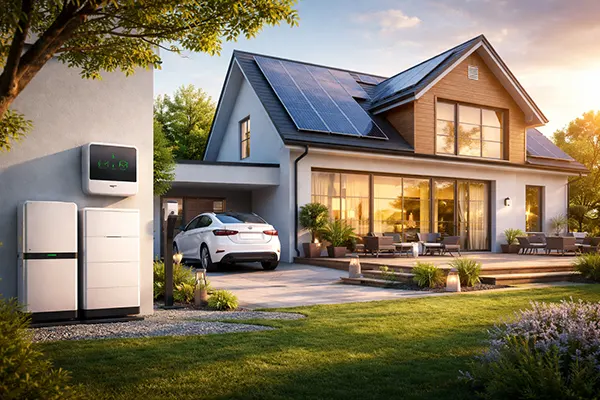
European energy companies have also invested in sodium-ion research programmes aimed at grid storage applications. Several pilot projects in Germany and France have tested sodium-ion batteries as stationary storage systems for renewable energy installations. Because energy density is less critical in stationary systems, sodium-ion batteries can compete more effectively in this segment.
Automotive manufacturers are cautiously exploring the technology as well. Smaller electric vehicles, urban delivery fleets, and two-wheelers are considered promising early markets. These vehicles often prioritise cost and durability over maximum range, making sodium-ion batteries a practical alternative to more expensive lithium-based chemistries.
Limitations That Still Affect Large-Scale Adoption
Despite the progress achieved by 2026, sodium-ion batteries still face technical limitations that slow their adoption in high-performance applications. The most notable challenge is energy density. Even the latest sodium-ion prototypes typically reach around 140–160 Wh/kg, while advanced lithium-ion cells can exceed 250 Wh/kg. For long-range electric vehicles, this difference remains significant.
Cycle life is another factor under active development. Although sodium-ion batteries can achieve several thousand charge cycles under controlled conditions, maintaining stable performance across different temperature ranges and charging speeds remains a complex engineering task. Manufacturers are experimenting with improved electrolytes and electrode coatings to increase long-term durability.
Market infrastructure also plays a role. Lithium-ion technology benefits from decades of industrial scaling, established supply chains, and widespread expertise. Sodium-ion batteries must still prove that they can reach comparable manufacturing volumes while maintaining consistent quality and safety standards.
Where Sodium-Ion Batteries Are Most Likely to Succeed
The most realistic near-term applications for sodium-ion batteries are areas where energy density is less critical than cost, durability, and safety. Large-scale energy storage for renewable power grids is one of the most promising sectors. Wind and solar installations require stable storage systems capable of operating for thousands of cycles, and sodium-ion technology fits these requirements well.
Urban electric mobility is another potential market. Electric scooters, small city cars, and delivery vehicles rarely require extreme driving ranges. For these vehicles, reducing battery cost can be more important than maximising capacity, which opens the door for sodium-ion battery integration.
Finally, sodium-ion batteries may become a complementary technology rather than a direct replacement for lithium-ion systems. Hybrid battery packs that combine different chemistries are already under development, allowing manufacturers to optimise cost, performance, and durability for specific applications. This balanced approach may ultimately determine how widely sodium-ion technology spreads in the global battery market.