
Physical AI: How Artificial Intelligence Is Moving from Software into Robots, Sensors and Autonomous Machines
Artificial intelligence is no longer confined to algorithms running quietly on servers. By 2026, it has become a physical force, embedded in machines that perceive, decide and act in the real world. This shift is often described as Physical AI — a combination of advanced models, sensors, robotics and edge computing. Instead of analysing data after the fact, systems now respond instantly to their environment, whether in a factory, a hospital or on public roads. The transition is not just technical; it changes how industries operate, how safety is managed and how decisions are delegated between humans and machines. :contentReference[oaicite:0]{index=0}
What Physical AI Means in Practice
Physical AI refers to artificial intelligence systems that interact directly with the physical world through hardware. Unlike traditional AI, which processes digital data in isolation, these systems rely on sensors such as cameras, LiDAR, radar and tactile inputs. They interpret surroundings in real time and convert insights into physical actions, from adjusting robotic arms to navigating vehicles.
One of the defining characteristics is the integration of perception, reasoning and execution within a single loop. For example, an autonomous warehouse robot does not simply follow pre-set paths; it continuously evaluates obstacles, optimises routes and adjusts behaviour based on changing conditions. This real-time adaptability is made possible by improvements in edge computing and compact AI chips.
Another key aspect is decentralisation. Instead of relying solely on cloud infrastructure, many Physical AI systems process data locally to reduce latency and improve reliability. This is critical in scenarios such as industrial automation or medical robotics, where delays of even milliseconds can affect outcomes.
Core Technologies Behind Physical AI
At the foundation of Physical AI are sensor fusion systems, which combine data from multiple sources to create a more accurate understanding of the environment. For instance, combining visual data with depth sensing allows machines to operate reliably in low-light or complex conditions.
Machine learning models, particularly those based on deep learning and reinforcement learning, enable systems to improve through experience. In robotics, reinforcement learning is widely used to teach machines how to manipulate objects or navigate unfamiliar spaces without explicit programming.
Hardware innovation also plays a crucial role. Specialised processors such as GPUs and AI accelerators allow complex models to run directly on devices. This reduces dependency on external servers and enables faster, more autonomous decision-making in real-world environments.
Applications Across Industries in 2026
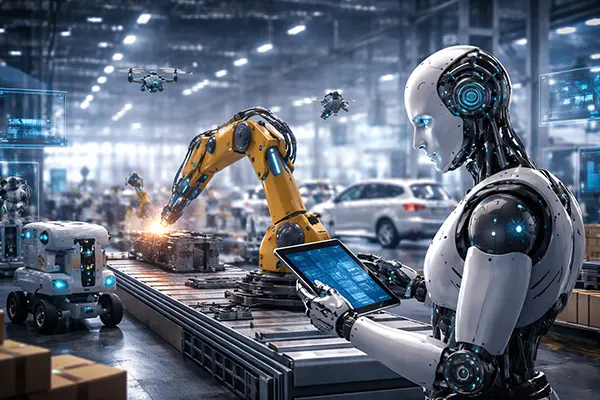
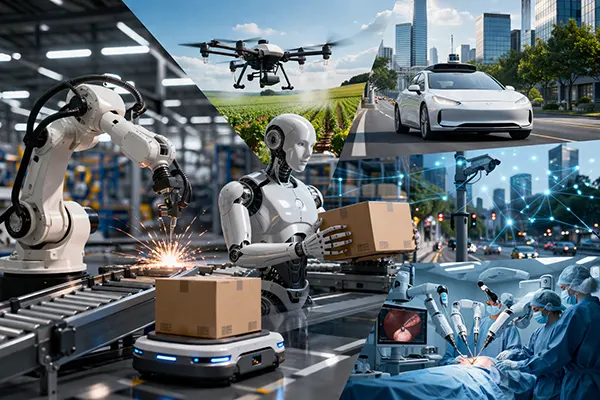
Manufacturing has been one of the earliest adopters of Physical AI. Smart factories now use AI-driven robots that can adapt to different tasks without complete reconfiguration. These machines detect defects, adjust assembly processes and collaborate with human workers more safely thanks to improved perception systems.
In transport, autonomous vehicles continue to evolve beyond pilot projects. By 2026, advanced driver assistance systems have matured into highly autonomous platforms in controlled environments such as logistics hubs and designated urban zones. These systems rely heavily on Physical AI to interpret dynamic road conditions and respond in real time.
Healthcare is another area where Physical AI is gaining traction. Surgical robots now assist with precision procedures, guided by AI models that analyse imaging data during operations. Rehabilitation devices also adapt to patient progress, offering personalised therapy based on continuous feedback.
Emerging Use Cases Worth Watching
Agriculture is seeing rapid transformation through autonomous machinery. AI-powered tractors and drones monitor crop health, optimise irrigation and reduce the use of chemicals by targeting specific areas. This approach improves efficiency while addressing sustainability concerns.
Urban infrastructure is also becoming more intelligent. Smart traffic systems use real-time data from sensors to manage congestion, adjust signal timings and improve safety. Physical AI enables these systems to react instantly rather than relying on static schedules.
Another growing field is service robotics. From delivery robots operating in cities to autonomous cleaning systems in commercial spaces, Physical AI allows machines to function reliably in environments that were previously too unpredictable for automation.
Challenges and Risks of Physical AI Integration
Despite its potential, Physical AI introduces new challenges. Safety remains a primary concern, especially when machines operate alongside humans. Systems must be designed with robust fail-safes and the ability to handle unexpected scenarios without causing harm.
Another issue is data reliability. Physical AI systems depend heavily on sensor inputs, which can be affected by environmental conditions such as weather, lighting or interference. Ensuring consistent performance across different contexts requires extensive testing and validation.
There are also regulatory and ethical considerations. As machines take on more decision-making roles, questions arise about accountability, transparency and control. Governments and organisations are working to establish frameworks that balance innovation with public safety.
Future Outlook and Strategic Implications
Looking ahead, Physical AI is expected to become more generalised. Instead of systems designed for a single task, future machines will handle multiple functions with minimal retraining. This shift will make automation more flexible and accessible across industries.
Collaboration between humans and machines will also evolve. Rather than replacing workers, Physical AI is likely to augment human capabilities, handling repetitive or hazardous tasks while people focus on oversight and complex decision-making.
Finally, the pace of development will depend on infrastructure readiness. Reliable connectivity, standardised protocols and secure data handling will be essential to support large-scale deployment. As these elements mature, Physical AI will move from specialised applications to everyday environments.