
Solid-State Batteries in 2026: Which Manufacturers Are Closest to Real Mass Production?
Solid-state batteries have spent years being described as the next major step for electric vehicles, yet 2026 is the point at which the discussion is becoming much easier to separate from laboratory promises. Several manufacturers now operate pilot or demonstration production lines, automotive-grade cells are being tested inside real vehicles, and the first companies have published specific commercialisation dates rather than broad long-term ambitions. Even so, there is an important distinction between producing working cells and manufacturing millions of automotive cells at consistent quality and competitive cost. Samsung SDI is targeting mass production in the second half of 2027, Toyota continues to work towards commercial use in 2027–2028, Nissan has an operating pilot line and targets an EV launch in fiscal 2028, while Factorial, Mercedes-Benz and Stellantis are already testing solid-state cells in road-going development vehicles. ProLogium has taken a different route, building manufacturing experience in Taiwan while preparing much larger European capacity. These programmes provide the clearest picture of how close solid-state batteries really are to practical production in 2026.
Samsung SDI, Toyota and Nissan Have Some of the Clearest Production Timelines
Samsung SDI has one of the most specific solid-state battery schedules among major established battery manufacturers. The Korean company completed its 6,500-square-metre S-Line pilot facility in Suwon in 2023 and began supplying prototype cells to customers. By 2026, Samsung SDI was publicly stating that mass production of its all-solid-state batteries was planned for the second half of 2027. This matters because the programme has moved beyond individual laboratory cells: the company has already been working on manufacturing processes, customer samples and production equipment. Samsung SDI is developing cells with a solid electrolyte and an anode design intended to raise energy density while maintaining the safety advantages associated with replacing a conventional liquid electrolyte. The company has also widened its development work through cooperation with BMW and Solid Power, combining Samsung SDI’s cell-manufacturing experience with Solid Power’s sulphide electrolyte technology and BMW’s vehicle-level testing capabilities.
Toyota is following a similarly serious industrial route, although its strategy depends heavily on preparing the materials supply chain as well as the battery itself. Toyota has repeatedly maintained a target of putting all-solid-state batteries into battery-electric vehicles in 2027 or 2028. Its partnership with Idemitsu Kosan is particularly important because Idemitsu is working on the sulphide solid electrolyte needed for Toyota’s cells and on the manufacturing methods required to produce that material in much greater volumes. Toyota has also worked with Sumitomo Metal Mining on durable cathode materials suitable for solid-state cells. Rather than treating the battery as a single isolated invention, Toyota is addressing materials, cell manufacturing and vehicle integration at the same time. The company has said that its solid-state design is intended to support shorter charging times and greater driving range, although final production specifications, prices and volumes remain dependent on successful industrialisation.
Nissan is another manufacturer with a defined route from experimental cells to an actual vehicle. Its all-solid-state battery pilot line at the Yokohama Plant began operating in January 2025, according to Nissan, and the company is targeting the introduction of an EV using internally developed all-solid-state batteries in fiscal 2028. Nissan is also working on the less visible parts of the manufacturing process that will determine whether the technology can be affordable at scale. In 2025 it announced a partnership with LiCAP Technologies to develop dry-electrode manufacturing for the cathode. Eliminating some of the solvent, drying and recovery stages used in conventional electrode production could reduce manufacturing complexity and cost, but Nissan has acknowledged that production efficiency remains one of the challenges. The existence of an operating pilot line makes Nissan’s programme more advanced than projects that remain limited to small laboratory batches, although the move from pilot production to commercial output still has to be demonstrated.
Why These Programmes Are Further Ahead Than Laboratory Prototypes
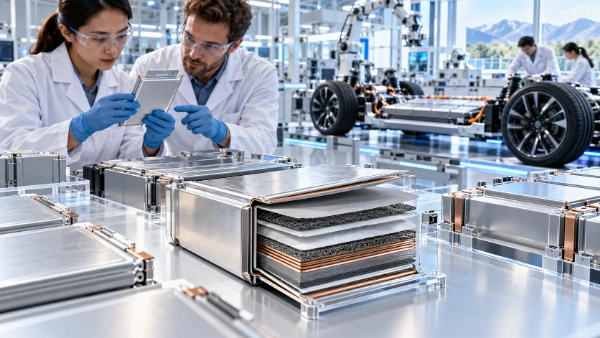
The strongest indicator of progress in 2026 is no longer a record energy-density figure from a small test cell. What matters increasingly is whether a manufacturer can repeatedly produce large cells, place them into modules or packs, meet automotive durability requirements and build them using processes that can eventually operate at industrial speed. Samsung SDI, Toyota and Nissan are significant because each company is addressing this manufacturing stage directly. Samsung SDI already has a dedicated pilot line and customer samples, Toyota is developing its manufacturing method alongside suppliers of key solid-state materials, and Nissan is using an operating pilot line to refine both its cell design and production process. None of these milestones guarantees that the published dates will be achieved, but they provide more evidence of industrial readiness than an isolated prototype with impressive laboratory performance.
Honda belongs close to this group even though it has been more cautious about naming a single mass-production date. The company built a demonstration line in Sakura City, Tochigi Prefecture, specifically to reproduce the manufacturing steps required for all-solid-state batteries. The facility covers about 27,400 square metres and includes equipment for material mixing, electrode coating, roll pressing, cell formation and module assembly. Honda planned to begin producing batteries on the line in January 2025 and has described the facility as a way to establish manufacturing methods, define cell specifications and examine production costs before wider use. Its public goal is to apply all-solid-state batteries to electrified vehicles introduced during the second half of the 2020s. That wording leaves more flexibility than Samsung SDI’s 2027 target, but Honda has nevertheless moved into a genuine pre-industrial phase.
There is also an important difference between battery developers and established vehicle or cell manufacturers. Companies such as QuantumScape, Solid Power and Factorial may supply crucial technology without necessarily becoming the companies that ultimately manufacture every cell in very large volumes. QuantumScape, for example, has been developing its QSE-5 lithium-metal cells while working with Volkswagen Group’s PowerCo on higher-volume manufacturing. Solid Power has focused heavily on sulphide electrolyte technology and partnerships with BMW and Samsung SDI. Factorial is working directly with several carmakers on vehicle integration. In each case, commercial success may depend on licensing, joint development or manufacturing partnerships rather than building a complete global battery-production network independently. That model can still lead to mass-market batteries, but it changes what it means for a company to be “closest” to mass production.
Factorial, ProLogium and QuantumScape Show Different Routes Towards Commercialisation
Factorial reached one of the most visible solid-state milestones when Mercedes-Benz began road testing an EQS equipped with Factorial lithium-metal solid-state cells in February 2025. Later that year, the test vehicle completed a 1,205-kilometre journey from Stuttgart to Malmö without recharging, with Mercedes-Benz reporting additional indicated range remaining at the destination. The test battery stored about 25% more usable energy than the standard comparison pack while remaining within a broadly comparable package. This was still a development vehicle rather than a production model, but it showed that the cells could move from controlled laboratory testing into a full automotive battery system. In June 2026, Stellantis also announced that Factorial cells had been integrated into a Dodge Charger Daytona development vehicle and that road testing had begun, giving Factorial active vehicle-validation programmes with more than one major automotive group.
ProLogium represents another route because it already has considerable experience making solid-state cells rather than relying entirely on future pilot facilities. The Taiwanese company opened a GWh-class factory in Taoyuan in 2024 and has reported shipping hundreds of thousands of cells from its newer generations as well as more than two million cells across its longer commercial history. In 2026, ProLogium also began construction of its planned factory in Dunkirk, France. The first phase is designed for around 4 GWh of annual capacity, while the site has a much larger maximum planned capacity if later expansion proceeds. Current company guidance places the beginning of the Dunkirk ramp-up around late 2028 or early 2029, followed by formal mass production and deliveries in the second quarter of 2029. This means ProLogium already has manufacturing evidence at smaller scale, but its much larger European automotive ambitions are still several years from full operation.
QuantumScape remains one of the most closely watched solid-state developers because its ceramic separator and lithium-metal cell design are intended to deliver high energy density without a conventional manufactured lithium-metal anode. The company began low-volume production and shipment of QSE-5 B samples for automotive evaluation and subsequently focused on its Cobra separator process, which is designed to raise manufacturing throughput substantially. Its work with PowerCo is central to the commercial plan: rather than depending entirely on QuantumScape building every future factory itself, the companies are preparing production methods that can be transferred into much larger automotive cell operations. In 2026, this programme is best viewed as advanced industrialisation rather than established mass production. B-sample cells and higher-volume equipment are important milestones, but qualification, yield, durability and large-scale economics still have to be proven before QSE-5 technology can be treated as a mainstream automotive product.
Road Tests Matter, but They Are Not the Same as Mass Production
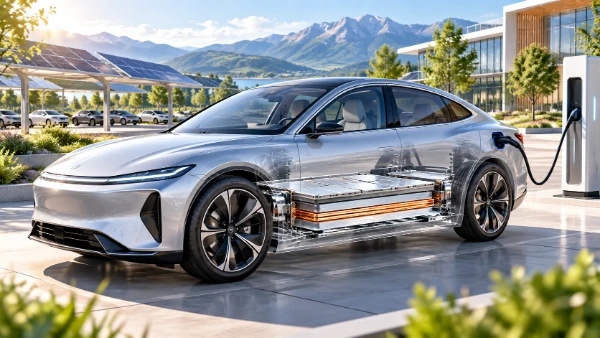
Vehicle testing is a major step because a battery inside a moving car faces conditions that are difficult to reproduce completely with individual laboratory cells. Temperature changes, repeated acceleration, fast charging, vibration and long periods at different states of charge all affect performance. Factorial’s programmes with Mercedes-Benz and Stellantis therefore provide stronger evidence than a laboratory energy-density figure alone. BMW has also integrated large-format all-solid-state cells associated with Solid Power into an i7 test vehicle, adding another real-car development programme. These tests allow engineers to study pack pressure, cooling, battery-management software and the physical expansion or contraction of cells during charging. A successful test vehicle shows that the technology can function as part of a complete automotive system, but it does not establish whether thousands of packs can be produced economically every week.
Manufacturing yield is one of the reasons that the transition remains difficult. A battery factory does not simply need to manufacture a good cell; it needs to manufacture an extremely high proportion of good cells with very little material waste. Solid electrolytes can introduce new problems involving interfaces between materials, microscopic defects and the pressure needed to keep layers in close contact. Lithium-metal designs can also experience changes at the electrode interface during repeated charging. Manufacturers have developed different solutions, which is why Toyota and Samsung SDI are working extensively with sulphide materials, QuantumScape uses a ceramic separator, and ProLogium has developed its own ceramic-based approach. The technology that produces the best laboratory result is not automatically the technology that will be easiest or cheapest to manufacture in millions of units.
Cost will ultimately determine how quickly solid-state batteries spread beyond expensive or specialised vehicles. New materials, different factory equipment and stricter production tolerances can initially make a solid-state cell expensive even if it offers excellent range or charging performance. Early commercial batteries are therefore likely to appear where their advantages justify a higher cost, such as premium electric cars, high-performance models or applications where weight and energy density matter greatly. Manufacturers will then have an opportunity to improve yield, increase output and reduce material costs before attempting broader use. This pattern is familiar from earlier battery technologies: technical readiness and mass-market affordability rarely arrive at exactly the same time. For buyers, the important date is consequently not only when the first solid-state vehicle appears, but when production becomes large enough to influence mainstream EV prices and availability.
What Real Solid-State Battery Production Is Likely to Look Like After 2026
Based on the schedules that manufacturers were publicly maintaining in 2026, the period from 2027 to 2029 is the most important window for the first serious wave of automotive solid-state commercialisation. Samsung SDI has given the clearest near-term manufacturing target by stating that all-solid-state battery mass production is planned for the second half of 2027. Toyota continues to target 2027–2028 for the market introduction of battery-electric vehicles using all-solid-state batteries, with broader production expected to develop after the initial launch. Nissan targets fiscal 2028 for an EV using its own all-solid-state cells. These schedules overlap, but they should not be interpreted as guarantees that all three companies will immediately reach conventional lithium-ion production volumes. Initial capacity may be limited, and the first vehicles may use the technology selectively while manufacturing data is collected.
Honda, Factorial and ProLogium broaden the picture beyond those dates. Honda’s demonstration line places it in a position to validate production methods before introducing the batteries into electrified vehicles during the latter half of the decade. Factorial has already achieved a different milestone by supplying cells that are being driven on public-road development programmes with major automotive manufacturers. ProLogium has existing manufacturing experience and is trying to convert that into much larger capacity, with its French factory expected to ramp later in the decade. BMW, Mercedes-Benz, Stellantis and Volkswagen Group are also important even where they are not the original inventors of the underlying cells, because carmakers provide the engineering, capital, qualification procedures and eventual vehicle programmes needed to transform battery technology into a commercial product.
It is also useful to separate true all-solid-state batteries from transitional technologies that are sometimes grouped under the same label. Some batteries use reduced quantities of liquid or gel electrolyte and are commonly described as semi-solid or solid-state-like designs. These can offer meaningful improvements and may reach production sooner, but they are not technically identical to the all-solid-state systems being developed by companies such as Toyota, Samsung SDI and Nissan. The distinction becomes especially important when comparing production announcements from different manufacturers. A company can legitimately be producing a battery described commercially as solid-state while using a different internal design from a fully solid electrolyte cell. For an accurate comparison in 2026, the useful questions are therefore what electrolyte system is being used, what size of cell has been demonstrated, whether automotive customers are testing it and whether an industrial production line actually exists.
Which Manufacturers Are Closest to Large-Scale Use?
Samsung SDI currently has one of the strongest combinations of an established battery-manufacturing business, a functioning all-solid-state pilot line, customer sampling and a specific 2027 mass-production target. Toyota is similarly advanced from an automotive perspective because it is preparing not only cells but also electrolyte and cathode-material supply chains for a planned 2027–2028 vehicle introduction. Nissan has made measurable progress by operating its Yokohama pilot line since early 2025 and retaining fiscal 2028 as its target for an EV using the technology. Honda’s demonstration factory gives it substantial manufacturing capability, although its public commercial timing remains broader. These companies therefore form a group whose programmes have moved clearly beyond small-scale research, even though the final transition into sustained high-volume output has not yet occurred.
Factorial and ProLogium deserve attention for different reasons. Factorial has produced cells capable of operating in real Mercedes-Benz and Stellantis development vehicles, which is a major validation step, but its eventual large-scale output will depend strongly on industrial partnerships. ProLogium can point to existing manufacturing and substantial cell shipments, while its future significance for the European automotive industry depends on completing and ramping the Dunkirk facility. QuantumScape also remains relevant because it has shipped automotive B samples and is developing higher-throughput manufacturing with PowerCo. Its route is based heavily on transferring cell and separator technology into a larger manufacturing organisation, so its progress cannot be judged only by the size of QuantumScape’s own facilities.
The practical picture in 2026 is therefore much more mature than it was only a few years earlier, but it is not yet a story of universal mass production. The industry has entered the stage where manufacturing lines, customer cells and full vehicles matter more than laboratory announcements. Samsung SDI’s 2027 target, Toyota’s 2027–2028 commercialisation programme and Nissan’s fiscal-2028 vehicle plan are among the clearest near-term schedules from established manufacturers. Factorial has demonstrated that solid-state cells can already function in demanding road-going prototypes, while ProLogium provides evidence that solid-state manufacturing can progress beyond experimental batches. The next decisive measure will be repeatable production at high yield, followed by enough annual capacity to place these batteries into vehicles in meaningful numbers. That is the point at which solid-state batteries will move from advanced development technology to a genuine part of the electric-car market.